Our client came to us with a request that we don’t need just a site but a story‑driven brand for a heritage craft business, evolving from basic presence to a conversion‑ready digital flagship. The development path clearly balances aesthetics, storytelling, and trust for B2B and high‑value B2C buyers. DigiTran though process in the building
 Phase 1: Brand Discovery and Positioning
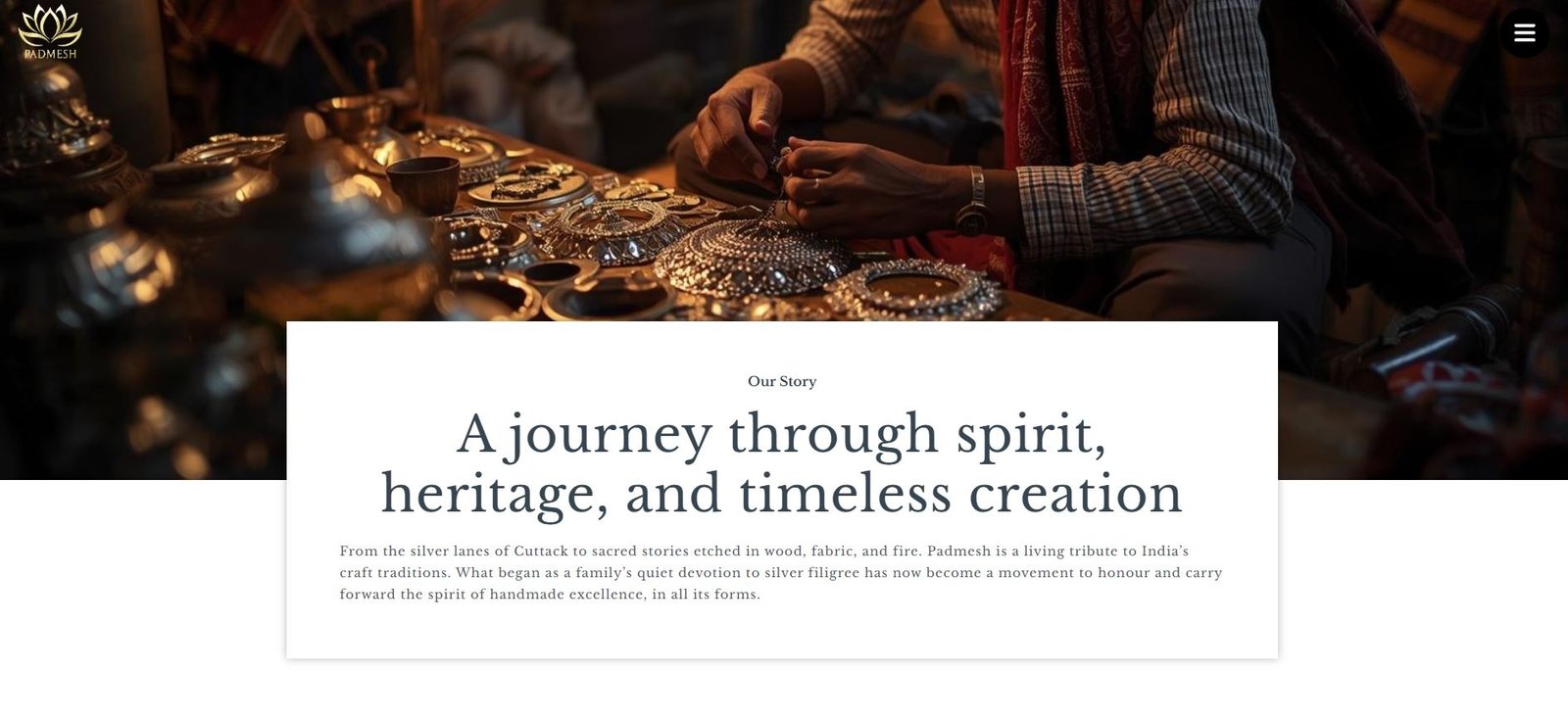
From an agency perspective, the first step is clarifying Padmesh as more than a “silver shop” and positioning it as a heritage craft house with modern luxury cues. The navigation items like “World Of Padmesh” and “Hands That Weave History” show a conscious move to sell the story and legacy, not just products.
Key strategic decisions:
- Define core narrative: “From Silver to Story” becomes the central brand promise.
- Map user personas: institutional buyers, luxury hospitality, gifting partners, and retail customers.
- Decide site goals: credibility, lead gen (Get in touch/Join Our Circle), and showcasing marquee collaborations.
Phase 2: UX Architecture and Content Strategy
The site structure suggests a deliberate information architecture separating brand storytelling, product portfolio, and contact flows. Menu items like “Product Portfolio”, “World Of Padmesh”, and distinct contact CTAs show planning for both browsing and inquiry journeys.
Agency focus in this phase:
- Create a lean top‑level navigation to avoid clutter while still surfacing key business pages.
- Plan long‑form narrative sections (e.g., process steps like Narrative Etching, Stone Selection, Hand Chiseling) to support premium pricing and trust.
Phase 3: Visual & Interaction Design
The copy “From Silver to Story” and sections like “Trusted by Leaders, Recognized Globally” indicate a design direction rooted in craft luxury—heritage, texture, and minimalism. The slider with recognitions and collaborations (Taj Kazana, Reliance Swadesh, Startup India/Odisha) shows the agency’s intent to foreground social proof visually, not only in text.
Design highlights from an agency lens:
- Process blocks (Narrative Etching, Stone Selection, Hand Chiseling, Fine Polishing) act as visual story cards, each linking deeper into “Hands That Weave History”.
- Social icons, email, and “Join Our Circle” are integrated into the header, blending brand and community building with usability.
Phase 4: Development and CMS Implementation
The live site hints at a CMS‑driven build (likely WordPress or similar) with reusable content blocks for product stories, recognitions, and “Why Us” value propositions. Elements like sliders, structured “Why Us” bullets, and footer link groups (Information, Our Stories, Certificate, Craftsmanship) indicate modular sections designed for non‑technical updates.
Typical dev decisions implied:
- Component‑based layout for hero, process/story blocks, testimonial/recognition slider, and USP list.
- Centralized linking for key journeys: product portfolio, brand story, and contact, allowing marketing to run campaigns without dev dependency.
Phase 5: Trust, Conversion, and Long‑Term Scaling
The “Why Us” section with lifetime money‑back guarantee, complimentary cleaning, legacy of Renuka Jewellers, and customization options shows the agency closing the loop between story and transaction. The footer with policy links, certificates, craftsmanship, and social channels is clearly set up for compliance, trust, and SEO‑friendly expansion over time.
Conversion and growth levers visible:
- Strong de‑risking copy (lifetime guarantee, complimentary services) to increase inquiry and purchase confidence.
- Clear brand credits (“Design And Developed By DigiTran Agency”) hint at an ongoing relationship for iterations, campaigns, and content growth rather than a one‑off build.